
Press Release
Guardian RF Provides Passive RF Drone Detection for Near-Border Airspace Demonstration at the Chippewa County Drone Project
Washington, D.C., July 16, 2026
Press Release
Guardian RF provided passive radio frequency drone detection during the live demonstration phase of the Chippewa County Drone Project, a 12-month initiative funded through Michigan's Office of Future Mobility and Electrification (OFME) and the Michigan Mobility Funding Platform, led by ANRA Technologies and the Chippewa County Economic Development Corporation. Conducted throughout the week of June 15 to 18, the demonstrations showcased how digital airspace infrastructure can safely support advanced Beyond Visual Line of Sight (BVLOS) drone operations in operationally complex environments.
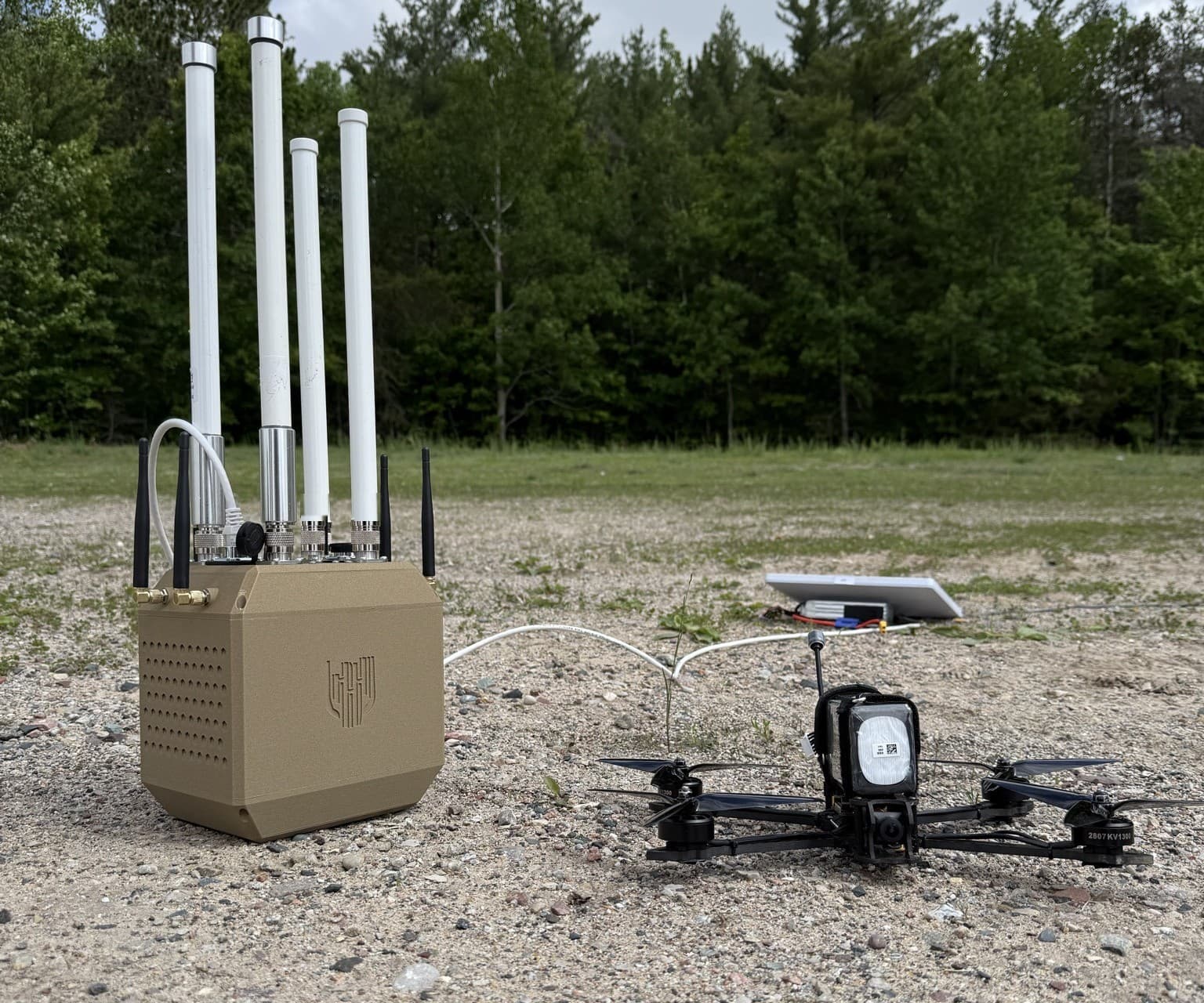
Guardian RF supported the demonstration as the passive RF detection provider. Guardian RF and Lighthouse Avionics deployed complementary radio frequency and optical detection technologies at both the Kinross Correctional Facility and the hydropower site, demonstrating how cooperative and non-cooperative aircraft can be monitored within a shared operational picture through ANRA's SIOP platform.
The event demonstrated a core requirement for scalable UAS operations: airspace management must account for both cooperative aircraft and non-cooperative drone activity. Cooperative aircraft may share position, intent, telemetry, Remote ID, or flight-plan information; non-cooperative drones may not. Guardian RF's passive RF sensing layer helped close that gap by detecting drone communications and RF activity that can be used to improve awareness around sensitive sites, a lightweight, rapidly deployable capability that brought real-time and historical drone detection into the operational picture without adding emissions or operational burden.
“At Guardian RF, our focus is the part of airspace awareness that cooperative systems alone cannot solve. Near-border operations, correctional facilities, utilities, and public safety environments need to understand what is actually in the airspace, including drones that are outside normal cooperative channels. This demonstration showed how passive RF detection can strengthen a shared operating picture without adding an operational burden.”
Guardian RF's sensors operated within one of the most demanding airspace environments in the country. The project established a new model for advanced drone operations by integrating UTM and Counter UAS (C-UAS) situational awareness to support commercial missions along an international border. Demonstration flights were conducted adjacent to the drone no-fly zone protecting the Soo Locks, showing how a shared digital airspace can coordinate authorized operations while providing real-time awareness of unauthorized or unknown aircraft.
By fusing cooperative flight data with RF and optical sensing into a Common Operating Picture, authorities responsible for protecting the Soo Locks could distinguish between approved operators and unknown aircraft, enabling more informed security decisions without disrupting legitimate commercial activity. Guardian RF supplied the RF sensing that made non-cooperative drone activity visible within that common picture.
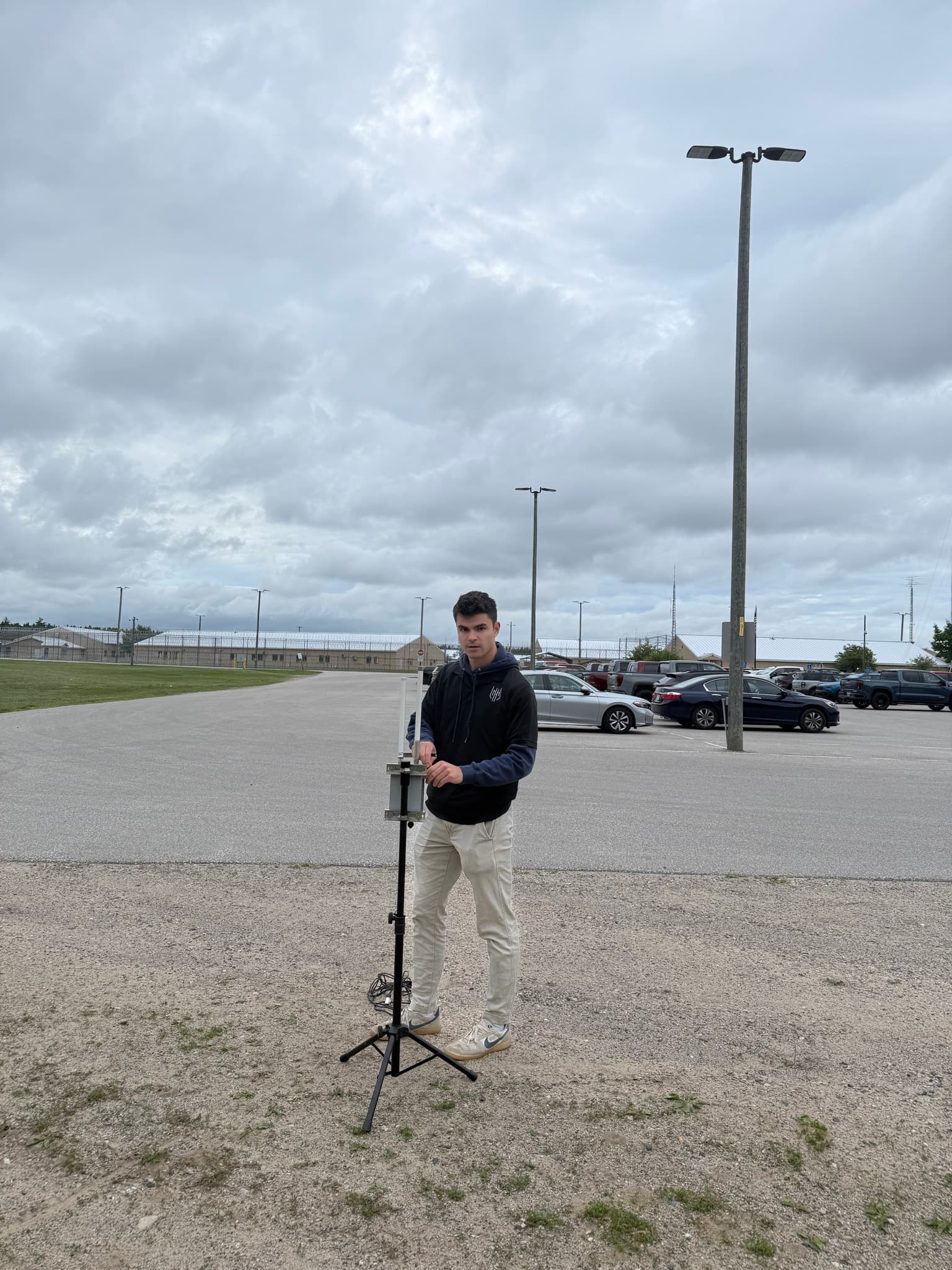
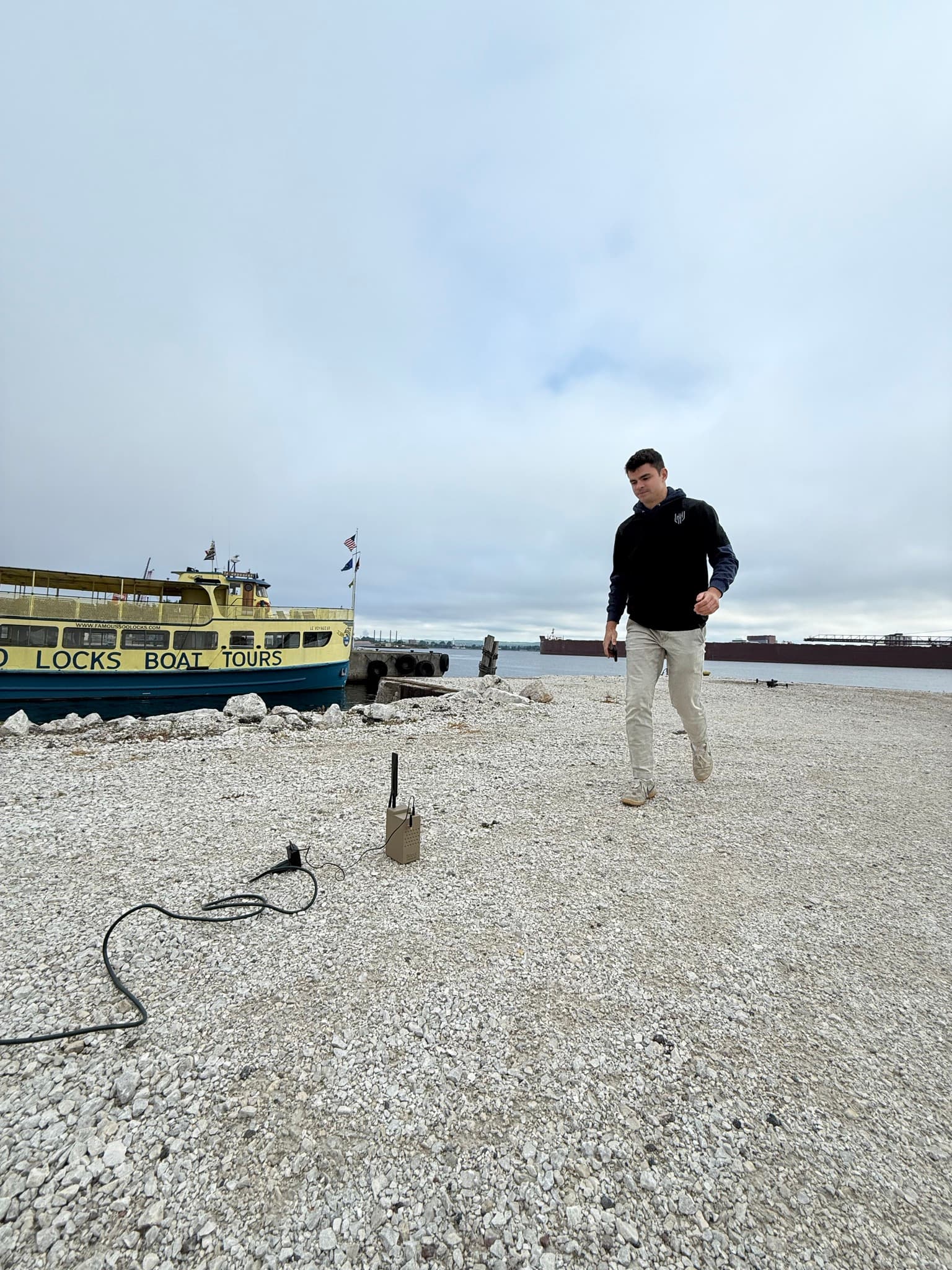
At the Kinross Correctional Facility, the deployment focused on the security challenge posed by drones operating near a prison perimeter, and RIIS LLC conducted flight operations around the facility, enabling detection, identification, and tracking of aircraft and demonstrating how security facilities can improve awareness of authorized and unauthorized drone activity. At the St. Marys Falls Hydropower Plant, where Cloverland Electric Cooperative enabled utility inspection demonstrations, Guardian RF's RF detection extended airspace awareness across the surrounding maritime-adjacent critical-infrastructure environment.
Guardian RF operated within a tightly coordinated regulatory environment. A key project milestone included securing the regulatory approvals required to conduct UAS operations in one of Michigan's most complex flight environments. Flight activities near the Kinross Correctional Facility were conducted with the approval of the facility's Warden and required close coordination with the FAA and NAV Canada due to the site's proximity to Chippewa County International Airport and the U.S.–Canada border.
“ANRA's SIOP provides the right framework for bringing multiple data sources into one operational view. The activity that is often missing from cooperative UTM feeds, unknown or non-cooperative drones, is exactly what matters most for critical infrastructure, corrections, executive protection, public safety, and border-adjacent operations. Passive RF detection is how you see it.”
ANRA provided the FAA-approved UAS Traffic Management (UTM) platform and Single Integrated Operational Picture (SIOP) for airspace coordination and situational awareness. Guardian RF integrated its detection data into that picture, adding a non-cooperative aircraft awareness layer alongside cooperative flight data and optical sensing.
A key measure of success was the participation of volunteer industry partners who contributed time, expertise, equipment, and facilities without direct funding. Guardian RF, Cloverland Electric Cooperative, and Lighthouse Avionics joined the initiative independently, reinforcing industry confidence in Chippewa County as an emerging hub for advanced drone operations and strengthening the overall demonstration ecosystem.
Across the broader project, Censys Technologies conducted infrastructure inspection flights, while Michigan Tech Research Institute (MTRI) supported aerial inspections of the Tower of History and railroad research, highlighting multiple inspection use cases. The Chippewa County Economic Development Corporation and Precision Approach coordinated regional stakeholder engagement and overall project implementation.
Guardian RF's participation reflects the company's continued work supporting distributed passive RF detection for public safety agencies, critical infrastructure operators, correctional facilities, campuses, and security teams. The company's systems are designed for fast deployment, persistent monitoring, geofence-based alerting, and integration into broader command-and-control and airspace-management environments.
About Guardian RF
Guardian RF builds passive RF-based drone detection and airspace awareness systems for public safety, critical infrastructure, national security, and executive protection environments. The company's systems detect drone RF activity, support operator-location awareness, provide alerting and geofencing workflows, and integrate with broader operating platforms through structured data outputs, using low-cost and low-SWaP sensors that can be deployed and online in minutes. For more information, visit guardianrf.com.
About ANRA Technologies
ANRA Technologies is a leading provider of airspace management solutions for uncrewed and crewed aircraft. Headquartered in Washington, DC, with offices in the UK, Estonia, Dubai, and India, the company's platforms support flight planning, UAS Traffic Management (UTM), mission management, operations centers, and advanced air mobility. ANRA was awarded the FAA's first Letter of Acceptance for a non-vertically integrated UTM Service Supplier to provide Strategic Coordination Services and is the only airspace management company certified by the European Union Aviation Safety Agency as a U-space Service Provider. For more information, visit anratechnologies.com.
About the Chippewa County Drone Project
Funded through OFME's Michigan Mobility Funding Platform, the Chippewa County Drone Project is helping establish Michigan's Upper Peninsula as a regional center for advanced drone operations. The project demonstrated a repeatable model for deploying digital airspace infrastructure in rural and near-border environments while supporting future commercial, public safety, critical infrastructure, and cross-border drone operations.
Media Contact
Guardian RF
contact@guardianrf.com
guardianrf.com